

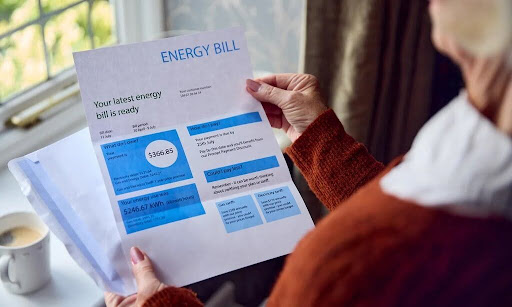
From 1 January to 31 March 2026, Ofgem’s energy price cap will rise very slightly. A “typical” dual-fuel household paying by Direct Debit will see an annualised bill of about £1,758, up just £3 or 0.2 per cent on the October–December 2025 level of £1,755.
That sounds tiny, and for many people the pounds and pence each month will barely move. The trouble is context. Even with this modest change, Westminster researchers estimate that bills under the January–March 2026 cap are still roughly 45 per cent higher than in winter 2021–22, before the energy crisis really hit. So the cap is no longer a story about big jumps, but about stubbornly high costs.
This piece breaks down what Ofgem has actually announced, how the cap shows up on your bill, who is covered and what you can sensibly do now. No jargon, no false promises – just the bits that matter when you are staring at a direct debit you are not sure you can trim any further.
What exactly has Ofgem announced for January–March 2026?
Ofgem updates the default tariff cap every three months, based on a formula that includes wholesale gas and power prices, network costs, supplier operating costs and certain policy costs such as social and environmental schemes. For the first quarter of 2026, that calculation produces an annualised figure of £1,758 for a “typical” dual-fuel household that uses 2,700 kWh of electricity and 11,500 kWh of gas a year and pays by Direct Debit.
The change from the current level is small: up 0.2 per cent, or roughly 28 pence a month for that typical household. Year on year, Ofgem and independent analysts point out that the cap is actually about £37 lower than the same period in 2025, once you adjust for inflation. Electricity unit prices are creeping up a little, while gas unit prices fall slightly, and standing charges for both fuels tick up by around 1.1 pence a day.
Behind those small shifts sit bigger forces. Wholesale prices are no longer at their 2022 peaks, but they remain higher and more volatile than before Russia’s invasion of Ukraine. New policy costs, including support for major projects such as the Sizewell C nuclear scheme and investment in networks, are also being folded into the cap. So a cap that once mainly reflected wholesale swings is now also a vehicle for long term infrastructure funding.
In brief
The January–March 2026 cap nudges the “typical” bill up by only £3, but that still leaves households paying around 40–45 per cent more than before the energy crisis, largely because network and policy costs remain elevated.
How the price cap actually shows up on your bill
The single biggest misunderstanding is that the cap sets a maximum bill. It does not. The cap limits what suppliers can charge you for each unit of energy (the unit rate, measured in pence per kWh) and for the daily standing charge. Your actual bill is those prices multiplied by how much you use, plus VAT and any add-ons.
For January–March 2026, Ofgem’s GB-wide average rates under the cap work out at about 27.69 pence per kWh for electricity with a standing charge of 54.75 pence a day, and 5.93 pence per kWh for gas with a standing charge of 35.09 pence a day, for Direct Debit customers on standard variable tariffs. Regions and payment methods vary: prepayment users and standard credit payers often see different mixes of unit prices and standing charges, and Scotland, for example, tends to have higher electricity costs than some English regions because of network differences.
Standing charges deserve special attention. Parliamentary researchers note that for the first quarter of 2026, around half the electricity standing charge is made up of network costs – the high-voltage transmission grid plus the local distribution system – with the rest covering things like metering, policy schemes and bad debt. In other words, you pay something every day simply for being connected, even before you flick on a single light.
Some consumer groups are printing simple “how the cap works” advice sheets this winter to hand out at food banks, warm spaces and advice centres. A free qr code generator can be an easy way to add a scannable link on those leaflets straight through to Ofgem’s own explanation page, so people who do have smartphones can dig into the detail later without hunting.
In brief
The cap is really a cap on unit rates and standing charges, not on your total bill, so cutting usage and understanding your daily standing charge matter just as much as the headline £1,758 figure.
Who the cap protects – and who it does not
The Ofgem price cap applies to people in England, Scotland and Wales on standard variable or “default” tariffs, including most prepayment deals. If you have never chosen a fixed deal, or your fix has ended and you have rolled onto your supplier’s standard tariff, you are almost certainly covered.
If you are on a fixed-rate tariff, the cap does not set your prices, although suppliers will usually take the cap into account when they design new fixed offers. The cap does not apply in Northern Ireland, which has its own regulatory system and different domestic market. Nor does it apply to heat networks, LPG or oil heating, where prices are set separately and can move differently to grid gas and electricity.
Within those limits, the cap has protected millions from the worst of the crisis. Ofgem estimates that around 9 million households are directly affected by each change. But it is a blunt tool. It does not distinguish between low-income and high-income households. It offers the same maximum unit prices to someone in a small flat and to someone in a sprawling, draughty home – the difference is simply how much they consume.
That is where targeted advice and support come in. Local authorities, housing associations and charities increasingly try to connect residents with consistent, trusted information on the cap, on debt help and on schemes such as the Warm Home Discount or any new discretionary funds. Printed letters and newsletters can only carry so much detail; some teams now add a small QR box that points straight to Ofgem or a reputable advice site, created via a free qr code generator, so people can use a quick scan rather than typing complex URLs.
Another complication is that many households are already in arrears. Recent figures suggest energy debt has climbed into the billions, with a rising number of people missing Direct Debit payments or being moved onto repayment plans. For these customers, the cap mainly works in the background; the immediate battle is negotiating affordable repayments and making sure their supplier is following the new rules on support for vulnerable customers.
In brief
The cap protects most households on standard variable and prepayment tariffs in Great Britain, but it does not help with off-grid fuels, fixed deals or existing debts, and it cannot target support by income.
What households can do now before the new cap kicks in
You cannot control Ofgem’s formula, but there are practical levers you can pull before 1 January – and through the winter – to keep bills as manageable as possible.
First, check what tariff you are actually on. If you are on a standard variable tariff, you are directly under the cap; switching to a decent fixed deal might save you money, but only if the fixed rate is genuinely lower than the current cap levels and you are happy to accept exit fees if prices fall later. If you are on an old fix that is now much higher than cap levels, talk to your supplier; many will let you move to their standard tariff without penalty.
Second, take and submit meter readings close to the changeover date if you do not have a smart meter. That stops your supplier estimating too much of your winter usage at the slightly higher January rates, as newspaper and consumer guides have repeatedly stressed when caps change. Smart meter users do not usually need to do this manually, but it is worth checking that the meter is actually sending readings.
Third, focus on the big, boring efficiency wins. Research from the Energy Saving Trust and parliamentary briefings shows that relatively simple steps – improving loft insulation, turning down boiler flow temperatures, draught proofing and swapping out halogen bulbs – can cut hundreds of pounds a year off bills in a typical home, often with little or no loss of comfort.
Community hubs and advice centres are increasingly central to this. Many now hand out printed checklists on simple energy-saving actions and local grant schemes. When space on paper is tight, a tiny QR in the corner linking to an online calculator or Ofgem’s guidance can make those leaflets far more powerful; again, a free qr code generator is usually all a volunteer or staff member needs to add that extra layer.
Finally, keep an eye on what happens after March. Current forecasts suggest the cap could fall by just over 3 per cent in April 2026, but analysts are clear that predictions are uncertain and depend heavily on future wholesale prices and network cost decisions. Fixing purely on the basis of a rough forecast is a gamble.
In brief
The most useful actions before January are checking your tariff, giving accurate readings, tackling cheap efficiency measures and using trusted local advice – not trying to second-guess every future cap announcement.
FAQ
Does the January–March 2026 cap mean my bill can’t go above £1,758?
No. £1,758 is an example based on typical use. The cap limits the price per unit and the daily standing charge. If you use more than the “typical” amounts of gas or electricity, your bill will be higher; if you use less, it will be lower.
Why are bills still so high if the cap is only rising by 0.2%?
Because current levels are sitting on top of big increases from 2022. A typical bill under the January–March 2026 cap is still around 45 per cent higher than in winter 2021–22, even after recent falls.
Who does the cap apply to?
It applies to households in England, Scotland and Wales on standard variable or default tariffs, including most prepayment deals. It does not cover fixed-rate tariffs, Northern Ireland, or off-grid fuels such as heating oil or LPG.
Is it worth fixing my tariff now?
It depends on the fixed price you are offered and your appetite for risk. If a fix is clearly cheaper than current cap rates, it could be worth considering, but forecasts for later in 2026 are uncertain and some fixes carry exit fees if you want to move again. Comparing offers against the new unit rates and standing charges is more useful than looking only at annualised figures.
What help is available if I still cannot afford to pay?
First, speak to your supplier; they must work with you on realistic repayment plans and extra support if you are vulnerable. You may also qualify for help such as the Warm Home Discount, local council hardship funds or independent energy grants. Citizens Advice and similar charities can check eligibility and help you negotiate.
